Building growth systems
that perform in the real world.
I help insurance carriers, MGAs, agencies, risk organizations, and ambitious businesses strengthen positioning, modernize distribution, and build scalable go-to-market systems through disciplined execution, data, technology, and practical leadership.
Operator · Builder · Strategic Partner
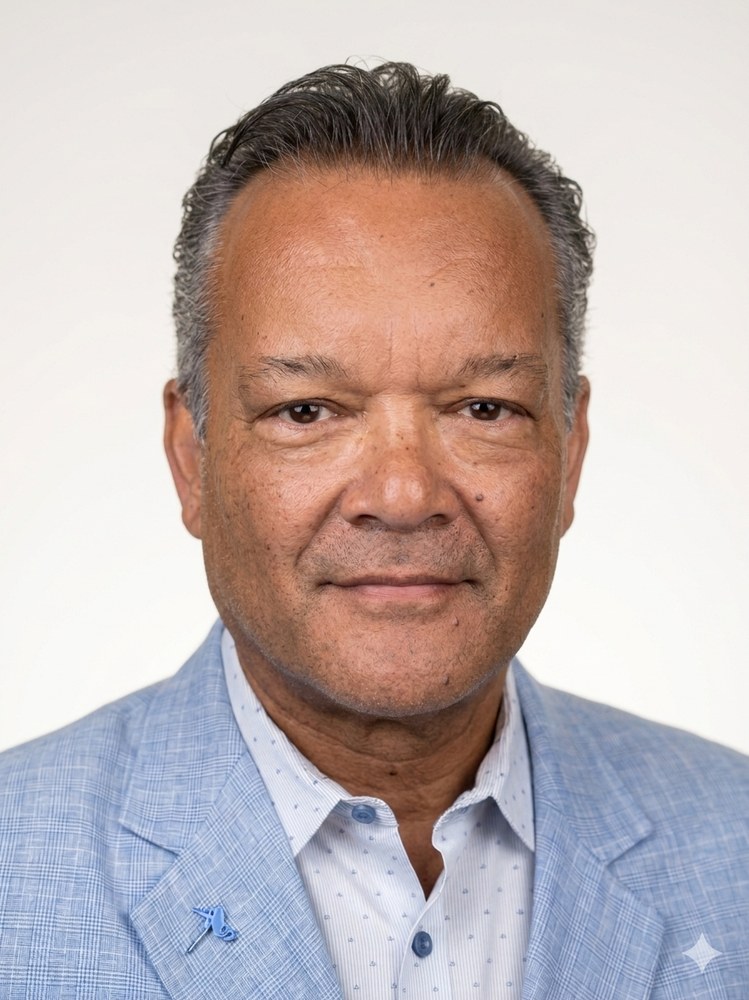
Thirty years of durable outcomes.
Experience at the intersection of growth, distribution, and execution.
I have spent more than three decades working where strategy meets commercial reality — building distribution, leading teams, developing markets, improving positioning, and helping organizations convert opportunity into sustainable performance.
My background spans commercial insurance, workers' compensation, small business, transportation, technology, sales, marketing, and operating leadership. I have worked inside carriers, MGAs, growth-stage organizations, and emerging ventures where success depends on more than a polished plan — it requires market judgment, underwriting awareness, disciplined execution, and the ability to bring people with you.
Today, I apply that experience to organizations that need clearer positioning, stronger distribution, modern go-to-market systems, and practical leadership capable of turning strategy into measurable action.
Outside the day-to-day, I tinker on retail-agency problems under a personal workshop I call Seven16 — a bench for building solutions the market's gaps make obvious.
More about how I work →Where I create the most value.
Distribution architecture
Design and improve channel strategies, partner ecosystems, market access, producer engagement, and distribution operating models.
Brand and market positioning
Clarify value, audience, differentiation, and market narrative so the right buyers understand why the organization matters.
Go-to-market systems
Build the strategy, processes, tools, content, measurement, and accountability required to consistently take an offering to market.
Data, technology, and AI
Apply data, automation, platforms, and AI to improve decisions, workflows, customer experience, and organizational leverage.
Leadership and execution
Align teams, operating rhythm, incentives, priorities, and performance measures so strategy becomes execution.
Where the operating principles have shown up.
-
$65M → $311M
200%+ CR → UW profitPacificComp · CopperPoint · Alleghany · 2014–2020Second-in-command to the Regional President of a 700-FTE carrier. Inherited a distressed California workers' compensation book at 200%+ combined ratio; took the in-force book from $65M to $311M and moved the underwriting result to profit inside 32 months. Led distribution, verticalized the BDM organization, and covered underwriting for 120 days through a leadership transition.
-
$0 → $45M
in 18 monthsKinetic Insurance · Venture-Backed InsurTech MGU · 2021–2024Employee #2 at a venture-backed InsurTech MGU. Built distribution from scratch to $45M written premium in 18 months, recruiting 30 of the Top 100 commercial brokerages inside the first 90 days — before the first policy bound.
-
$20M → $150M
200 → 400+ agenciesAtlas General · RPS / Arthur J. Gallagher · 2011–2012First distribution leader hired at a California workers' comp MGA. Grew written premium from $20M to $150M in 24 months. Designed an offshore BPO model that let 10–12 underwriters process 20,000+ submissions annually.
-
BOP portal
+795% submissionsBerkley Small Business Solutions · W. R. Berkley Corporation · 2024–2026Vice President, National Distribution, Sales & Marketing. Scaled non-fleet cargo from $42.6M to $75.6M in-force. Launched BOP portal across 40 states (submissions +795%); recruited 78 new agency partners in 2025. Selected for the W. R. Berkley Co-Pilot Power User Program. Concluding August 2026; continuing as a paid consultant.
Chief Revenue Officer, FastechHR
Effective August 2026
At FastechHR, I lead the revenue engine — sales, marketing, business development, and channel strategy — for a specialized, technology-enabled PEO focused on complex workers' compensation risk.
The role builds on twenty years of workers' compensation and commercial distribution experience: turning around a distressed underwriting book at PacificComp, building distribution networks measured in the hundreds of agencies, and structuring broker partnerships that grow with disciplined accountability. FastechHR is where those disciplines get applied to a segment the standard market has historically walked away from.
The audience is the same brokers I have spent my career building relationships with — the ones placing hard-to-cover workers' compensation risk in transportation, construction, healthcare, agriculture, and staffing. My job is to give them a program they can bring to a client with confidence, and a partner who will still be on the account six months after the policy binds.
Visit FastechHR →Where I tinker on what I see.
Outside FastechHR, I keep a personal workshop called Seven16 Group — not a business, a bench. The name is personal: 7, 1, 6 — three numbers that map to how I'm wired, the seeker, the pioneer, the builder. I hold that frame through a Christian lens, not as divination but as archaeology — digging up what God wrote in before I had any say in it.
Twenty years on the carrier and MGA side surfaces a long list of problems insurance technology never bothers solving from a retail agency point of view — the AMS/CRM that doesn't fit how an independent agency actually works, marketing that bleeds margin, lead generation that breaks in a soft market, producer training nobody refreshed since the last hard market. Seven16 is where I go to build something for those.
AI and modern coding tools have collapsed the cost of building. What used to take a consulting engagement now takes a few weekends and a sharp prompt. That's also where my AI practice lives — not as theory, but as something I build with, weekly, on real problems. The Executive Control Center on this site is a working example: a Claude-powered operating copilot I built from scratch, not a mockup.
What's shipped under the Seven16 name
Trucking & transportation insurance intelligence.
A portal and AI tooling built for producers and wholesalers — including Cassie, FastechHR's voice & chat agent.
Intelligence tooling for the insurance distribution channel.
Email infrastructure for the Seven16 product family.
Survey tooling, built on the same stack as the rest of the family.
Built for my daughter Mattea — she runs her own business on it, $250–$500 a day, no office required.
Four principles I operate from.
Clarity before activity
Define the market, audience, problem, and intended outcome before adding tactics.
Execution is part of strategy
A strategy that cannot be operated, measured, and adopted is incomplete.
Growth must be economically sound
Volume means little if quality, retention, service, risk, or profitability deteriorate.
Technology should reduce friction
Data, software, automation, and AI should help people make better decisions and perform higher-value work.
Observations from the operating layer.
Practical frameworks on insurance distribution, workers' compensation, go-to-market strategy, leadership, AI, and building organizations that can execute.
FastechHR's new AI voice and chat agent, now in beta — what she can answer, what she won't decide, and how to give her a real test.
A specialty FastechHR conversion path for wholesalers handling high-mod, cancelled, non-renewed, and new-venture blue-collar accounts.
For retail agents protecting difficult blue-collar accounts when the standard market stops working — and why we work exclusively through the agent.
Ways to work together.
I take on a limited number of small, project-scoped engagements alongside FastechHR — pick what fits, each one routes to the same conversation.
1-Hour Strategy Session
One focused problem — a distribution question, a go-to-market gap, a workers' comp or PEO market read. You bring the problem, I bring twenty years of pattern-matching.
Half-Day Deep Dive
A working session on something bigger — positioning, channel strategy, or putting AI to work inside real operations. Four hours, one deliverable you can act on.
Guest & Keynote
Conference keynotes, corporate events, and panels on commercial insurance distribution, workers' comp/PEO markets, and putting AI to work in real operations.
Podcast Guest
Conversations on distribution, sales discipline, carrier turnarounds, M&A integration, and AI in underwriting operations.
Advisory & Board Seats
Light-touch advisory conversations as bandwidth allows. Open to scope, timing, and fit.
Tinker Talk
Notes traded with operators and builders on retail-agency AMS/CRM, marketing systems, lead generation, and the AI tooling making it all cheaper to build.
Let's talk about what you are trying to build, fix, or accelerate.
The best conversations usually begin with a real operating challenge: a market that is not responding, a distribution strategy that has stalled, a brand that is poorly understood, or a growth plan that needs stronger execution.